
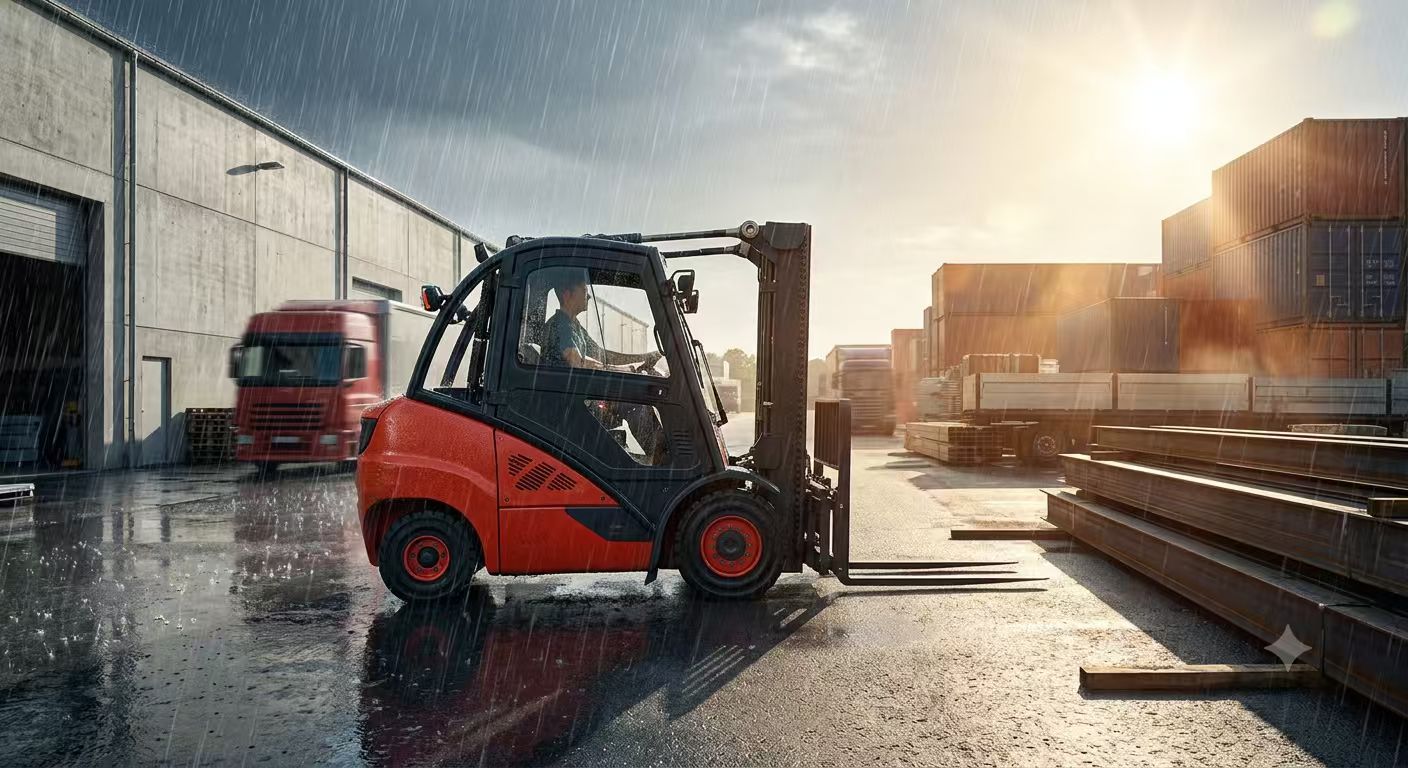
A Comprehensive Guide to Maintaining Electric Forklifts in Hot and Rainy Summer Weather
Hot and rainy summer weather presents a tough battle for electric forklifts. Challenges such as battery overheating, controller overload, hydraulic leaks, and tire blowouts are frequent. Master the following practical maintenance points for lead-acid and lithium-ion forklifts to ensure your equipment operates smoothly throughout the summer.
01. Battery Maintenance | Temperature Control and Targeted Strategies for Lead-Acid/Lithium-Ion Batteries
· Mandatory resting after operation: After ≥2 hours of continuous heavy-load operation, stop the machine and allow it to cool for 30 minutes before charging. Strictly prohibit "charging immediately after working."
· Three charging prohibitions: Do not charge in direct sunlight, in confined spaces, or in ambient temperatures exceeding 45°C.
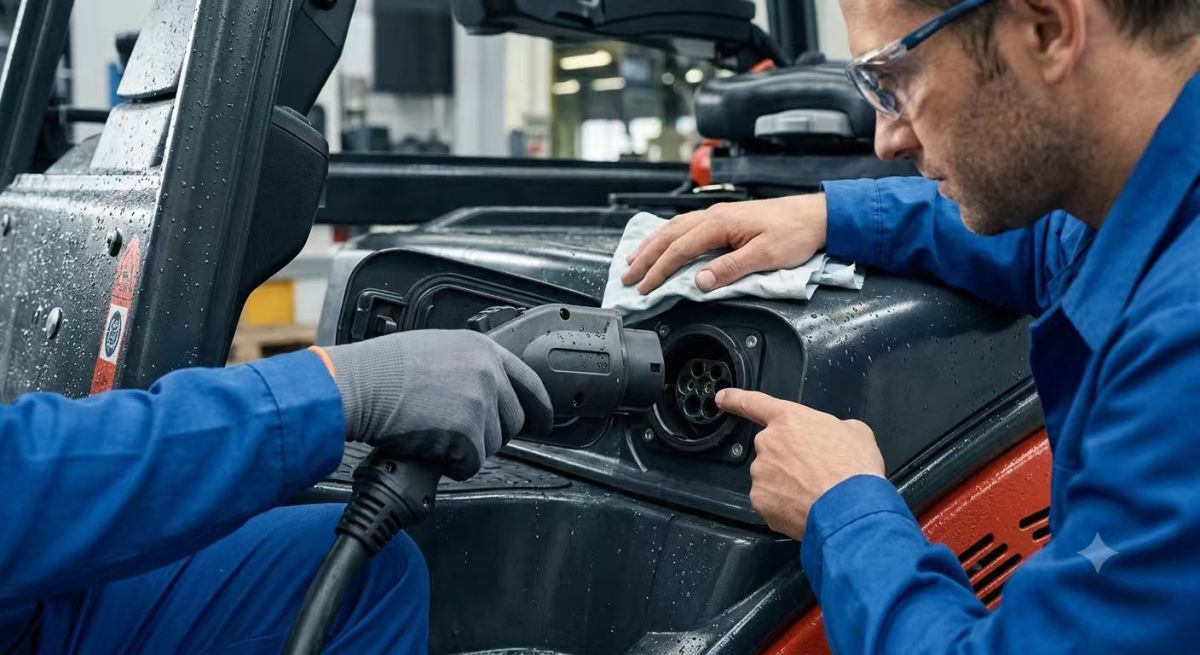
· Daily plug inspection: Wipe the charging port clean. Report immediately for repair if the plug is blackened, ablated, or loose.
· Power management (Lithium-ion): Charge promptly when the remaining power drops to ≥20%. Avoid long-term float charging.
· Electrolyte inspection (Lead-acid): High temperatures accelerate water evaporation. Regularly replenish distilled water to maintain normal liquid levels.
· Battery compartment ventilation: Open ventilation covers during high-temperature operations. Maintain a distance of ≥1 meter when charging multiple vehicles.
02. Motor and Controller | Cleaning and Heat Dissipation to Prevent Overheating Degradation
· Daily dust removal: Use compressed air to blow out heat sinks and air ducts to prevent blockages.
· Temperature rise judgment: If the casing is too hot to hold, stop the machine immediately to cool down.
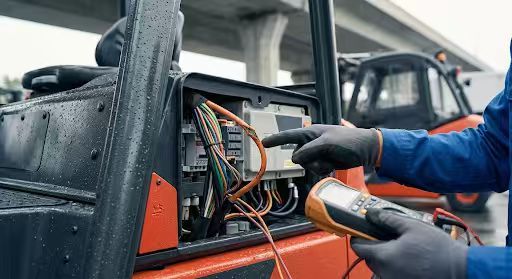
· Wiring harness protection: Check for damaged insulation or water ingress.
03. Hydraulic and Braking Systems | Regular Leak Checks to Ensure Precise Control
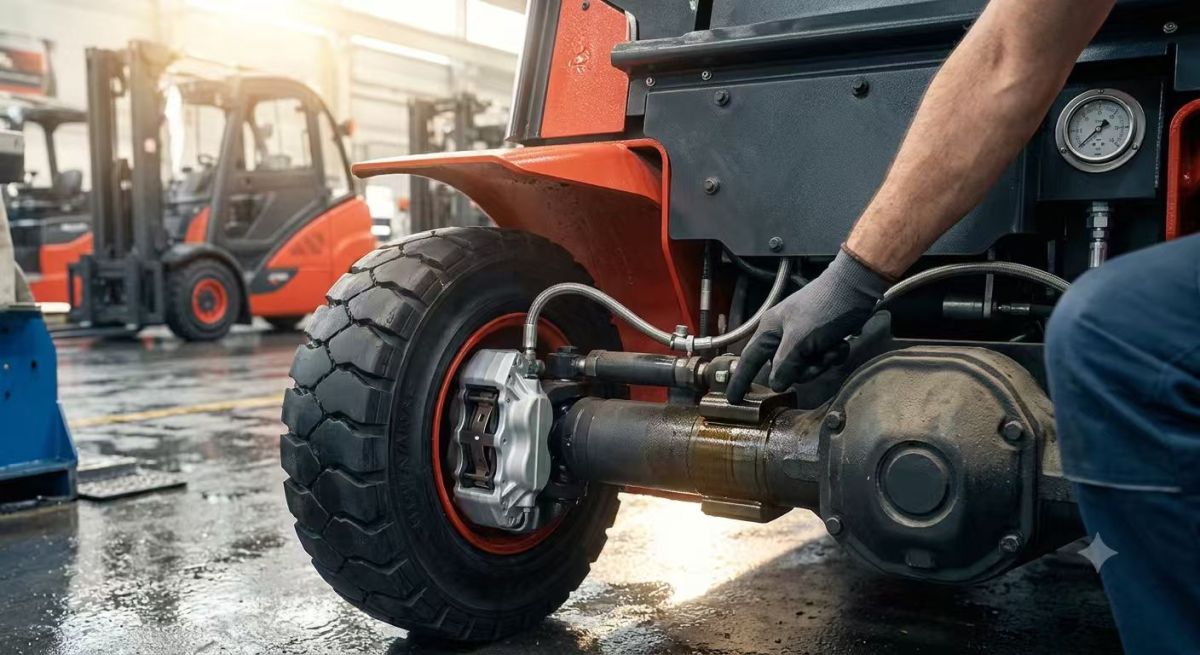
· Do not delay fixing oil leaks: High temperatures will cause leaks to worsen.
· Check soft brakes immediately: Thermal fade leading to brake failure is highly dangerous.
· Change to summer-specific hydraulic oil: Prevent the oil from thinning out at high temperatures, which causes weakness and abnormal noises.
· Key inspections: Check cylinders, joints, and oil seals. Replace components immediately upon detecting even minor leaks.
· Clean the hydraulic tank breather: Prevent cavitation and mast shaking.
04. Tire Maintenance | Dynamic Pressure Adjustment to Prevent Overheating and Blowouts
· Tire pressure adjustment: High temperatures will increase tire pressure. Adjust according to standard specifications to avoid blowouts caused by over-inflation.
· Tire wear inspection: High temperatures accelerate tire aging. If cracks or excessive wear are found, replace the tires promptly.
· Avoid prolonged heavy-load operations: Minimize sudden acceleration and harsh braking to reduce the risk of tire overheating.
05. Rainy Season Protection | Moisture-Proofing and Insulation to Prevent Water Damage
· Proceed with caution in standing water: Whenever possible, detour around flooded areas of unknown depth.
· Ventilate and dehumidify before clocking out: Open the electrical control compartment to prevent short circuits and insulation failures.
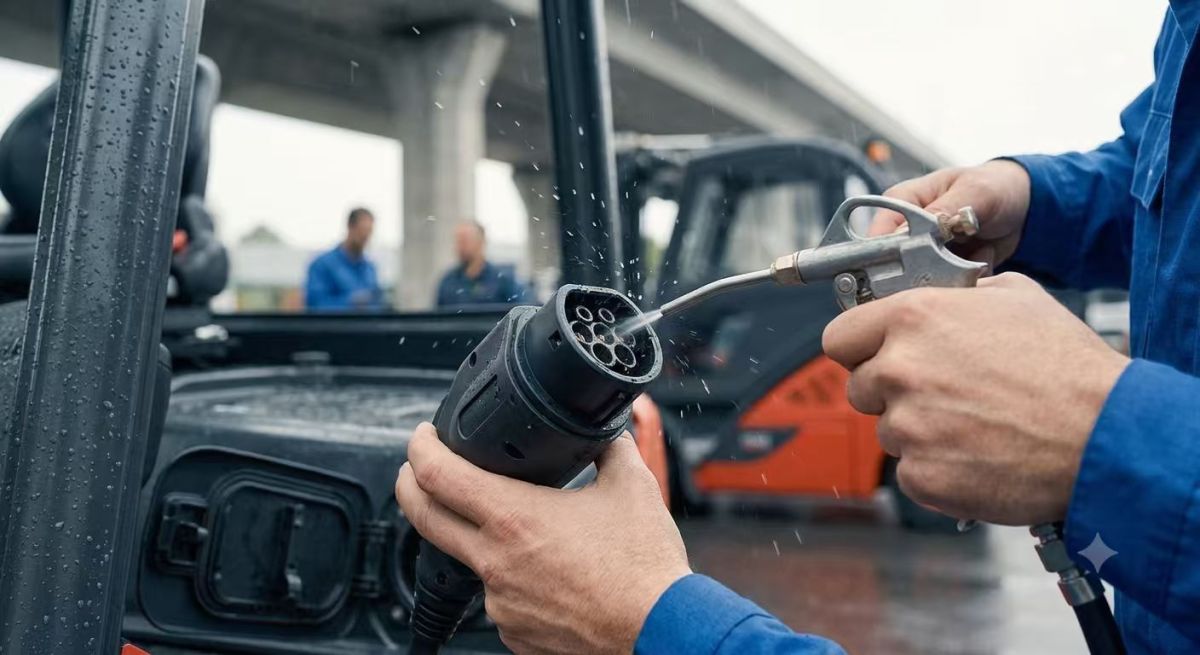
· Strictly prohibit powering on with wet plugs: If water marks are found on plugs or sockets during charging or maintenance, they must be thoroughly wiped and blown dry before turning on the power.
06. Daily Safety Inspection | Itemized Verification for Preventive Maintenance
Prevention is better than emergency repair. Establishing a sound daily inspection system is key to ensuring your electric forklift safely passes the summer. Daily checklist:
· Battery temperature / charging environment
· Check charging plugs for ablation
· Motor / electrical control air duct cleanliness
· Hydraulic oil levels and leaks
· Braking / steering lubrication
· Wiring inspection: Focus on aging or exposed harnesses to prevent short circuits.
· Tire pressure and wear
· Dashboard fault code records
· Fire safety preparations: Equip charging areas with dedicated fire extinguishers; stacking combustible materials is strictly prohibited.
· Note: We recommend conducting a comprehensive inspection monthly, including professional assessments like insulation and capacity testing.
07. Scientific Operation Management | Optimize Workflow to Reduce Failure Rates
· Adjust working hours: Schedule heavy-load operations during cooler morning and evening periods.
· Equipment rotation: Alternate the use of multiple forklifts to prevent single units from enduring prolonged heavy-load operation.
· Reduce load capacity: During extreme heat, appropriately reduce the rated load capacity by 10-15%.
· Rationalize operation time: Avoid continuous operation during peak noon heat, prioritizing high-intensity tasks for the morning or evening.
· Cab air conditioning check: Ensure normal A/C cooling to improve operator comfort and reduce the risk of fatigue driving.
Conclusion
The stable operation of forklifts in hot weather relies heavily on scientific maintenance. Regular inspections, reasonable usage, and timely servicing are essential to ensure the equipment remains efficient and safe during the summer. Share and save this guide to help your forklifts effortlessly tackle the challenges of the summer heat!
Related Posts
Online Message
GET IN TOUCH