
Procurement of Forklift Attachments: Moving Beyond Unit Price to Measure True Value via Total Cost of Ownership (TCO)
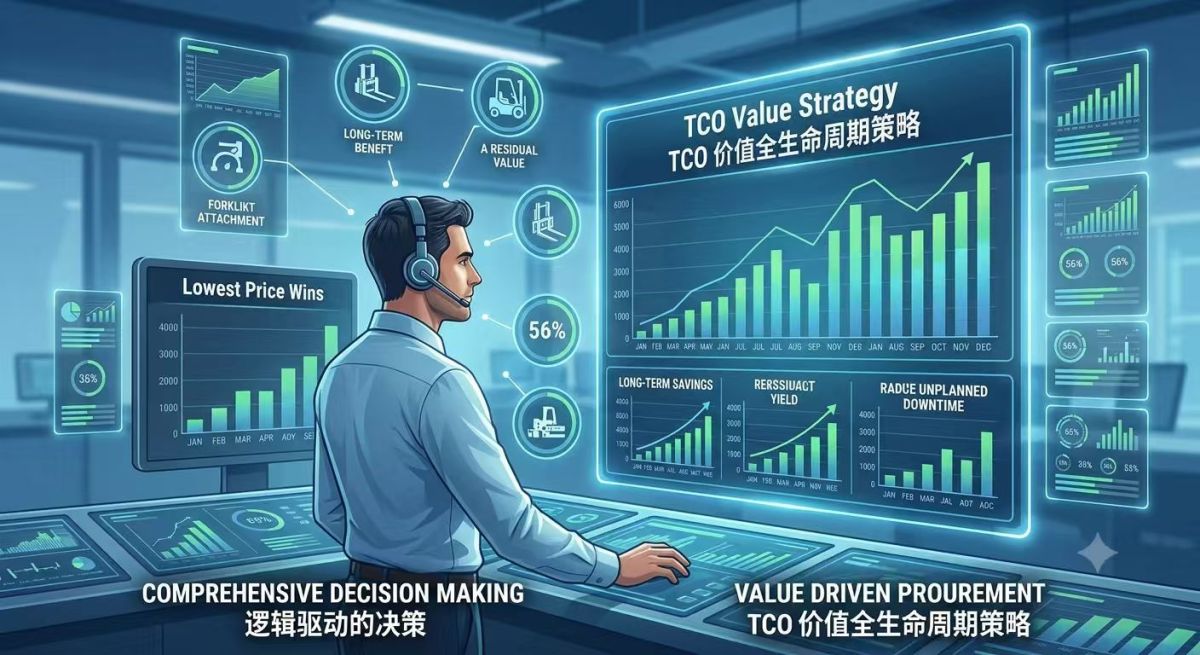
In the past, companies procuring forklift attachments often prioritized the initial purchase price. However, as the manufacturing and logistics industries continuously evolve toward lean operations, an increasing number of enterprises are realizing that what truly impacts material handling costs is not the equipment's "sticker price," but the comprehensive operating cost over its entire lifecycle. In other words, the true value of an attachment lies not in "how much it cost to buy," but in whether it can continuously and stably generate value in the years to come.
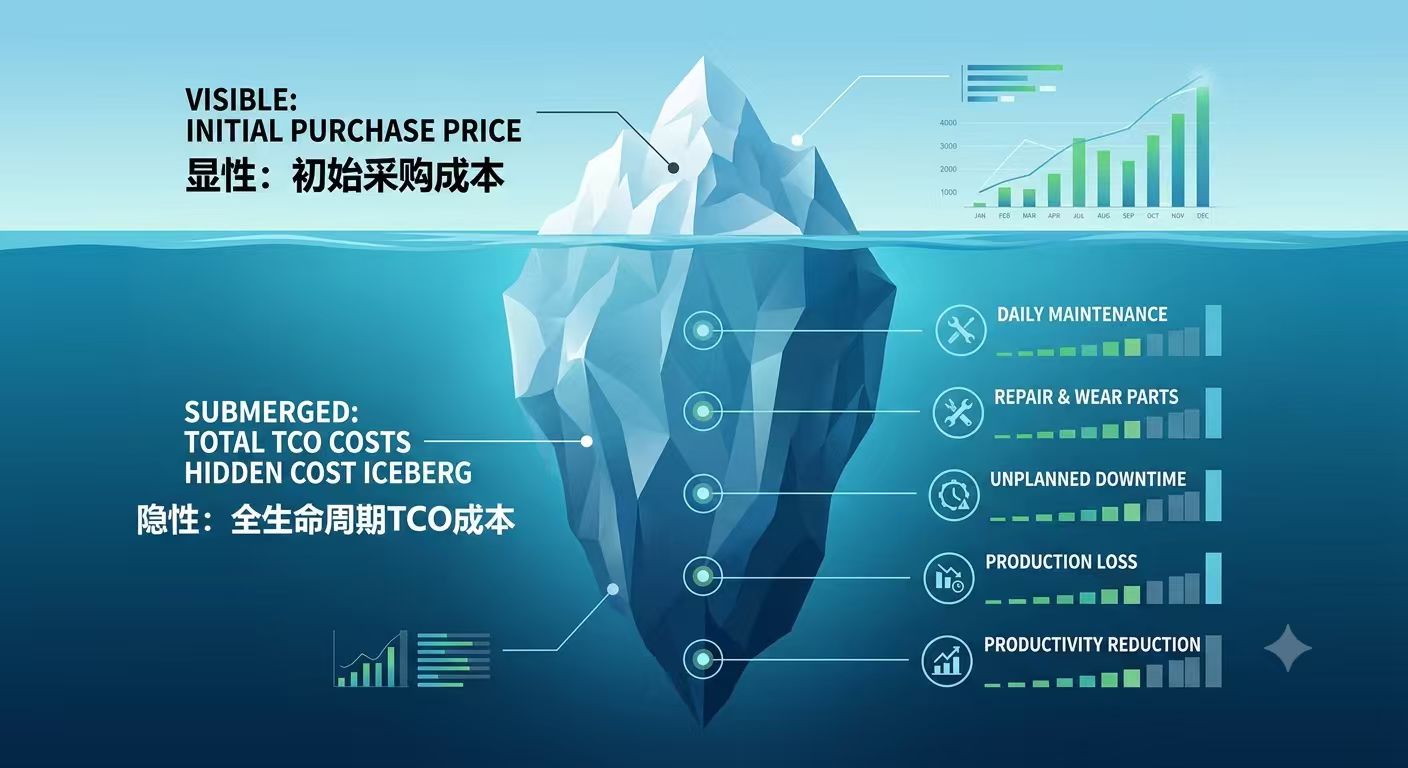
The Hidden Cost Iceberg: Attachment Costs Go Beyond the Purchase Price
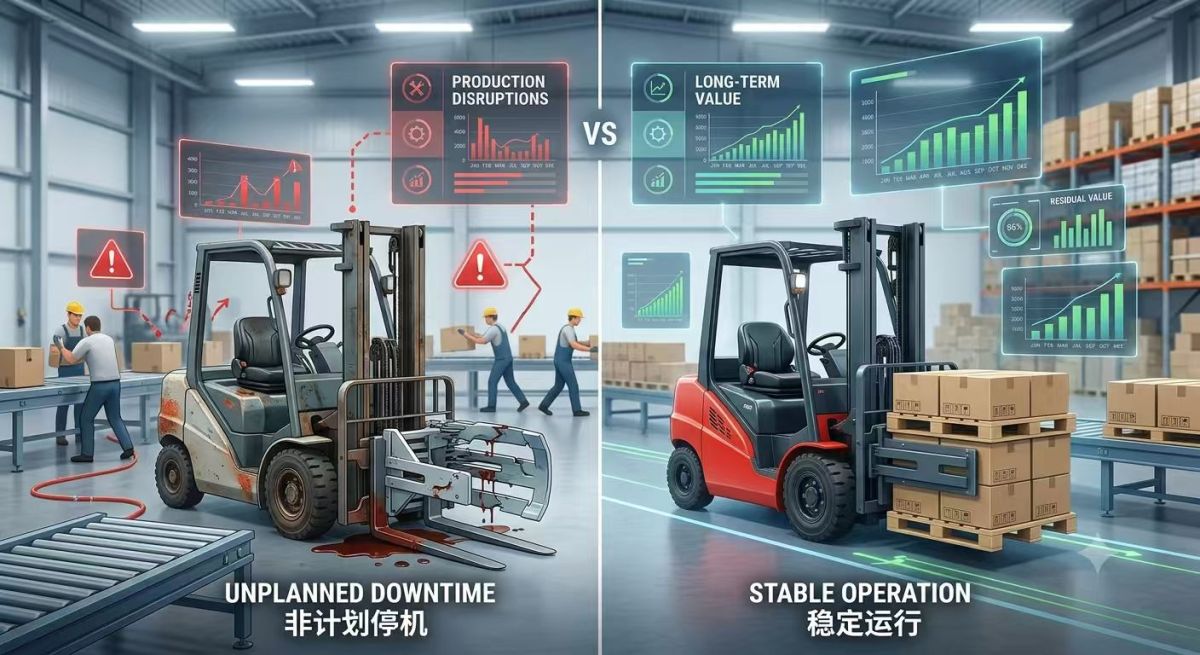
For industries such as warehousing, paper manufacturing, beverages, building materials, and appliance packaging, forklift attachments (e.g., paper roll clamps, carton clamps, bale clamps) perform high-intensity continuous operations almost daily. They are the "hands" of the forklift, directly interacting with the cargo. If these hands frequently "go on strike" or break down, it means not only a direct increase in repair labor and spare parts costs, but also disrupted production rhythms, plummeting warehouse throughput, and even cargo damage and delayed customer deliveries.
In-Depth Analysis of the Six Core Dimensions of Attachment TCO
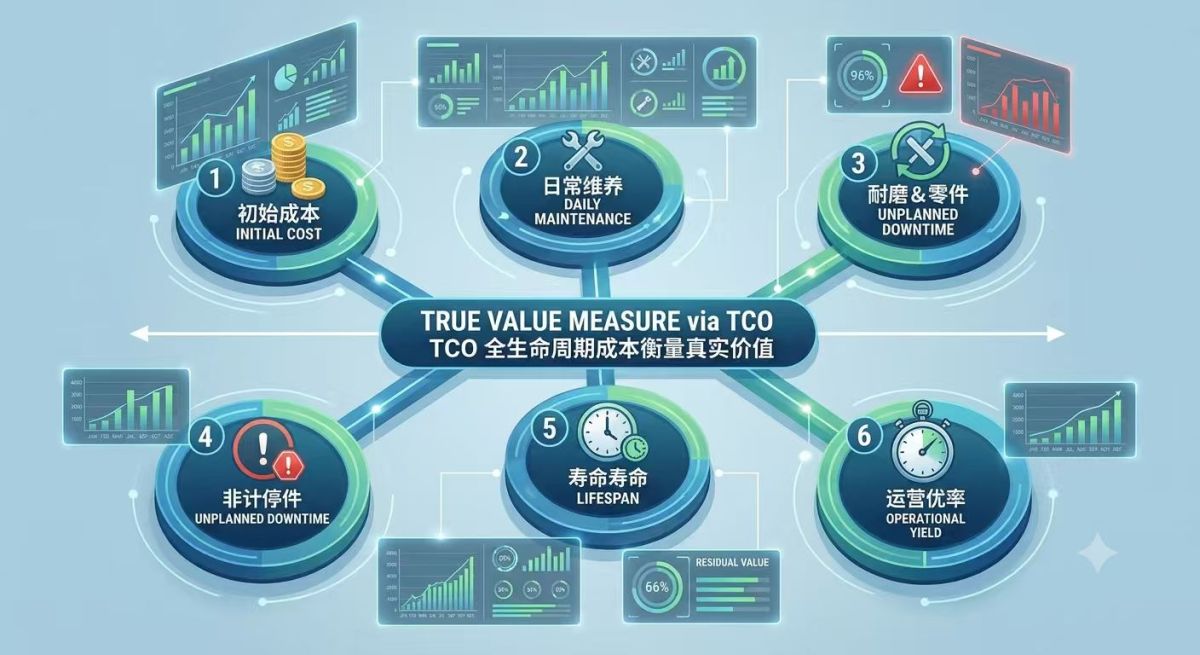
Enterprises are increasingly focusing on the concept of TCO (Total Cost of Ownership). For a set of forklift attachments, TCO typically encompasses the following six core dimensions:
1. Initial Procurement Cost: The direct expenditure when acquiring the equipment, including the unit price, freight, installation, and related financing costs.
2. Daily Maintenance Cost: Regular upkeep expenses during equipment operation, including labor and consumables required for lubrication, cleaning, tightening, and inspections.
3. Wear Parts Replacement Cost: The consumption of wear parts such as contact pads, slide bearings, high-pressure hoses, and seals. High-quality attachments typically use more wear-resistant materials, drastically reducing replacement frequency.
4. Production Losses from Unplanned Downtime: This is the most easily overlooked yet most fatal "hidden cost." Sudden attachment failures stall the forklift, halting entire production lines or loading docks. The resulting efficiency loss far exceeds the repair bill itself.
5. Equipment Lifespan and Residual Value: Premium attachments have a longer service life and maintain a higher residual value when entering the secondary market at the end of their lifecycle.
6. Operational Efficiency and Yield: Superior designs offer faster opening/closing speeds and more precise clamping force control (significantly reducing cargo damage rates), enabling more handling tasks in the same timeframe, which directly translates into corporate profit.
Shifting to Value-Driven Procurement: Reliability Triumphs Over Low Prices
Practice has proven that in the vast majority of high-frequency application scenarios, the reliability of equipment operation and the convenience of maintenance impact long-term operational costs far more than the initial purchase price. Astute fleet managers and procurement decision-makers are abandoning the "lowest price wins" mentality, seeking instead attachment solutions that offer comprehensive support, long-term durability, and exceptional performance.
By adopting the TCO lifecycle assessment model, companies gain clearer insights into true cost structures, turning every forklift attachment procurement into a wise investment that enhances core competitiveness and optimizes supply chain efficiency.
Related Posts
Online Message
GET IN TOUCH